




Libretto
Giovacchino Forzano, third part of The Triptych
First performance
New York, Metropolitan Opera House, December 14, 1918.
Synopsis
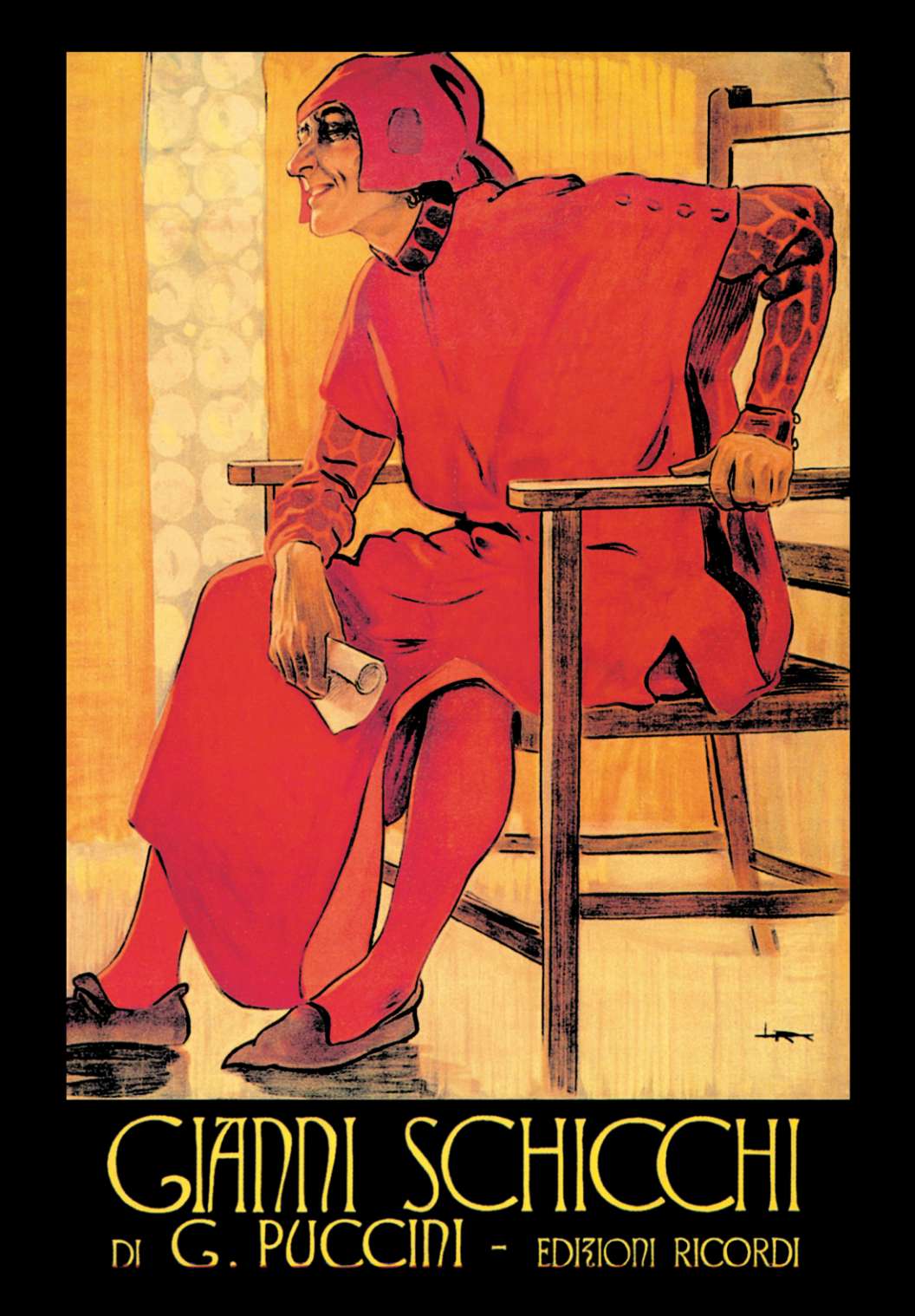
September 1, 1299. Gianni Schicchi, renowned throughout Florence for his brilliant wit, is urgently summoned by the relatives of Buoso Donati, a wealthy merchant who has recently died. The family is in a delicate situation: Buoso has bequeathed all his possessions to a convent, completely excluding his relatives. Desperate and in need of a solution, the Donatis ask Schicchi to find a clever solutionto change the will. Initially, Schicchi refuses to help them. However, the pleas of his daughter Lauretta—expressed in the famous romance “O mio babbino caro”—persuade him to reconsider. Lauretta is in love with Rinuccio, Buoso Donati’s young nephew, and Schicchi decides to act for his daughter’s sake, devising a brilliant plan that ultimately turns into a cruel twist.
To write the libretto for the third part of The Triptych, Puccini initially turned to the French writer Tristan Bernard, the author of numerous successful plays and also known in France as a novelist, who suggested one of his fables as the subject. However, this project fell through when Giovacchino Forzano drew the composer’s attention to the Divine Comedy and the bizarre character of Gianni Schicchi. Some, however, credit the successful choice to Puccini, who frequently read Dante and always carried a pocket edition of the masterpiece with him.
The opera’s composition, which took place almost entirely in Viareggio, began in July 1917 and was completed on April 20, 1918, except for a brief interruption in September for the finalization of Suor Angelica. When the three one-act operas were performed at the Metropolitan Opera in New York on December 14, 1918, Gianni Schicchi was a resounding success, receiving far more acclaim than Tabarro and the “anemic” Suor Angelica.